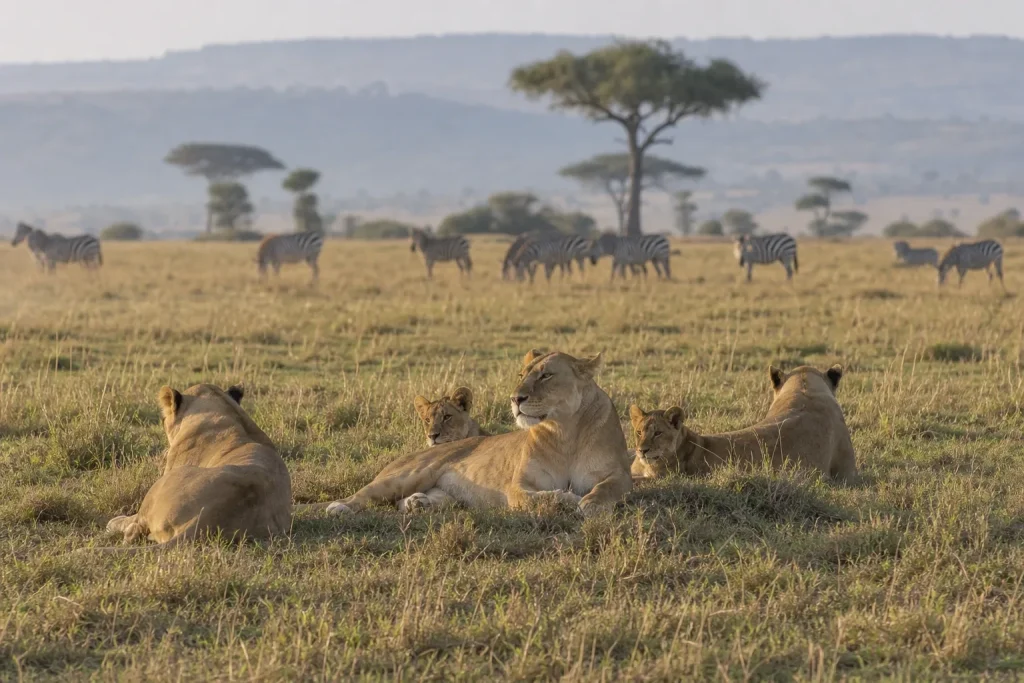
3 Days Masai Mara Safari from Nairobi
Plan a 3 Days Masai Mara Safari with expert guides, game drives and carefully chosen camps. Request a…
Masai Mara
View SafariExplore Kenya with Local Safari Experts
Discover unforgettable Kenya safaris across the legendary Masai Mara, Amboseli, Samburu, Tsavo, Lake Nakuru and the Kenyan coast. Follow the Great Wildebeest Migration, search for the Big Five, stay in handpicked camps, and tailor every itinerary around your dates, interests and budget.
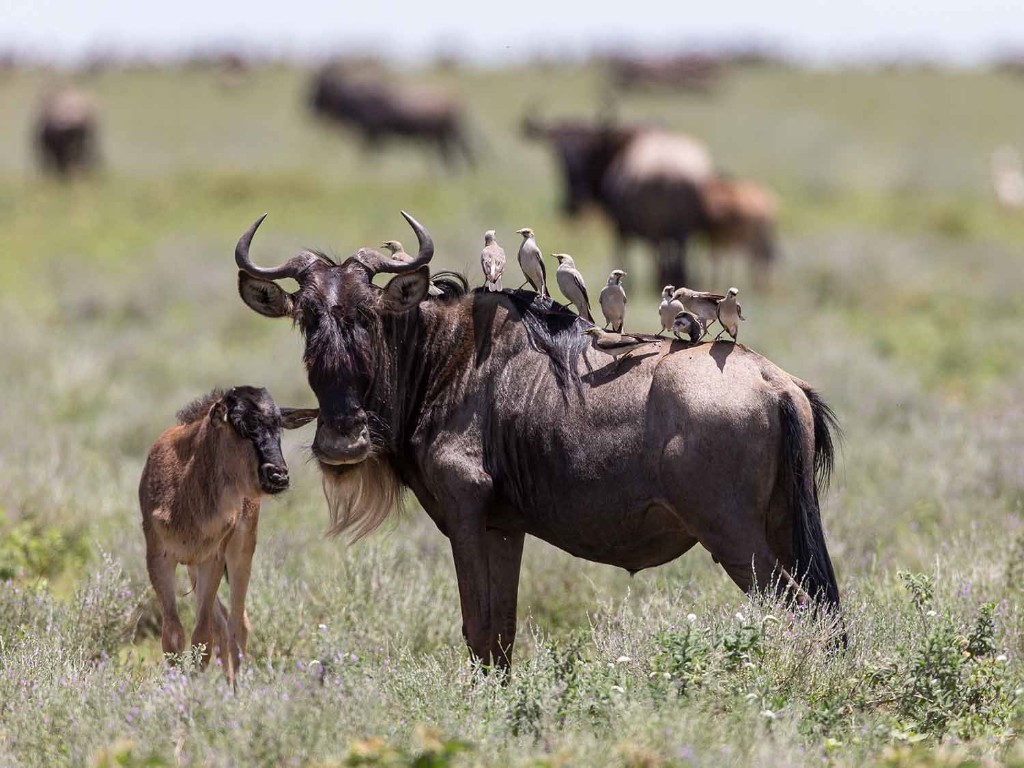
Kenya is one of Africa’s classic safari destinations, combining wildlife-rich savannahs, dramatic landscapes, diverse cultures and the warm waters of the Indian Ocean. From the vast plains of the Masai Mara to the elephant herds of Amboseli beneath Mount Kilimanjaro, every region offers a different safari experience.
We design journeys around what you actually want to see and do — following big cats in the Mara, photographing elephants in Amboseli, searching for rare northern species in Samburu, visiting rhino conservancies, or ending on the beaches of Diani and Watamu.
Plan a 3 Days Masai Mara Safari with expert guides, game drives and carefully chosen camps. Request a…
Masai Mara
View SafariExplore a 5 Days Masai Mara & Lake Nakuru safari with Big Five game drives, rhino viewing, Rift…
Masai Mara, Lake Nakuru
View SafariExplore the 7 Days Masai Mara, Nakuru & Amboseli with a day-by-day safari plan, key wildlife experiences, destinations,…
Masai Mara, Lake Nakuru, Amboseli
View SafariExplore the 8 Days Ultimate Kenya Safari with a day-by-day safari plan, key wildlife experiences, destinations, accommodation ideas,…
View SafariPlan a 10 Days Kenya Wildlife Safari with expert guides, game drives and carefully chosen camps. Request a…
View SafariCombine Kenya’s famous wildlife parks with Diani Beach on this 12 Days Kenya Safari & Diani itinerary featuring…
Diani Beach
View SafariWitness the Great
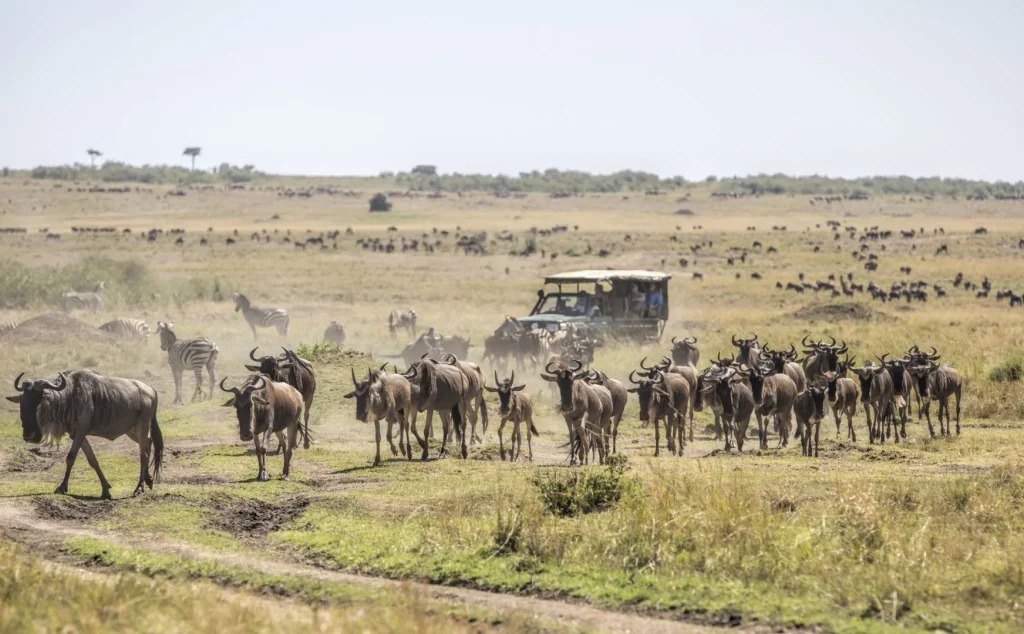
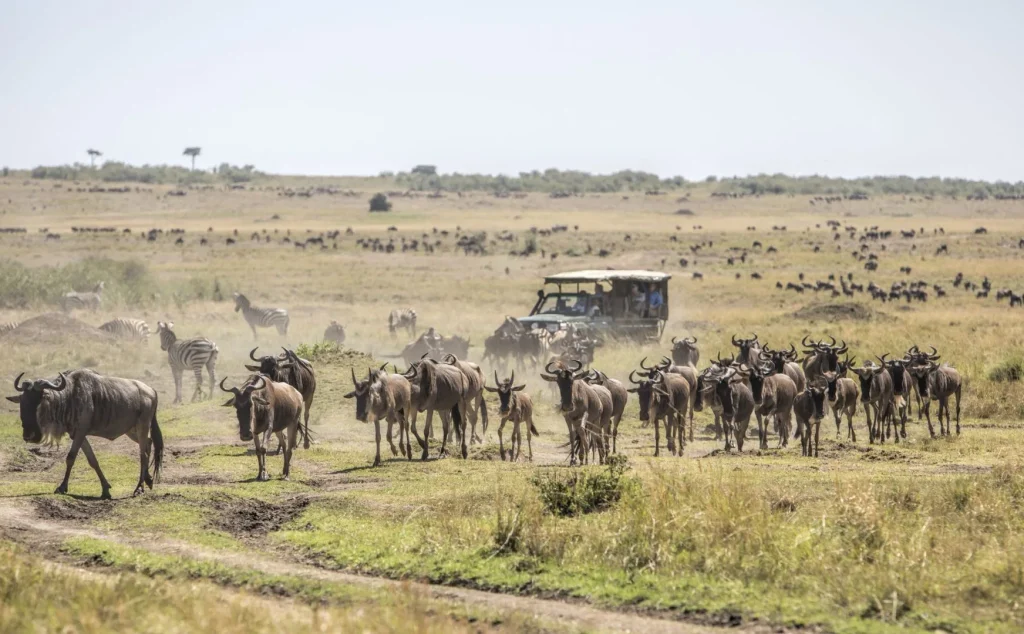
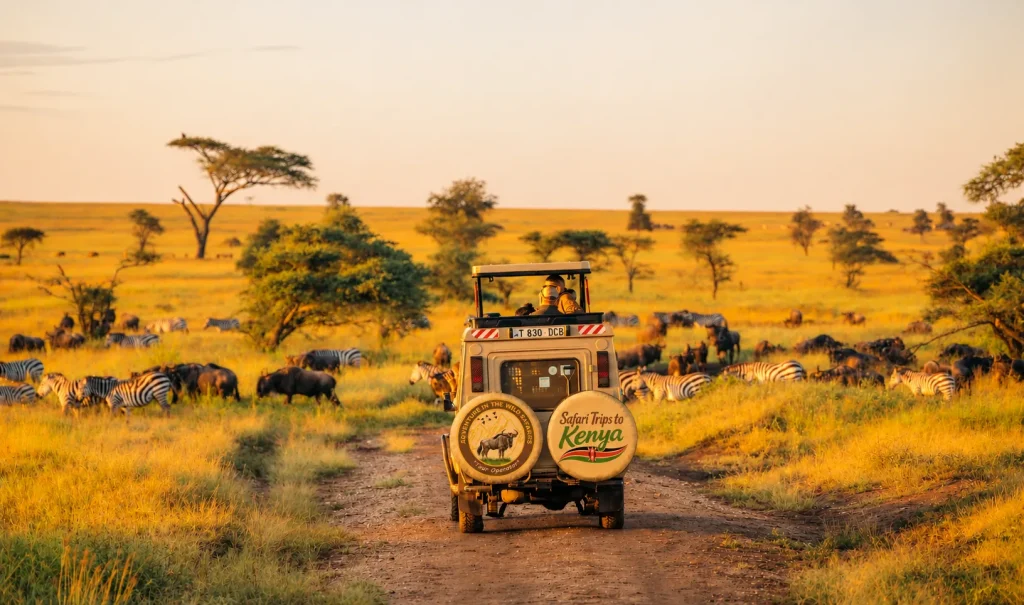
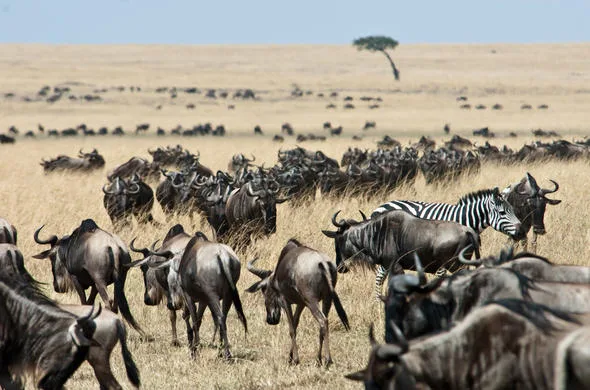
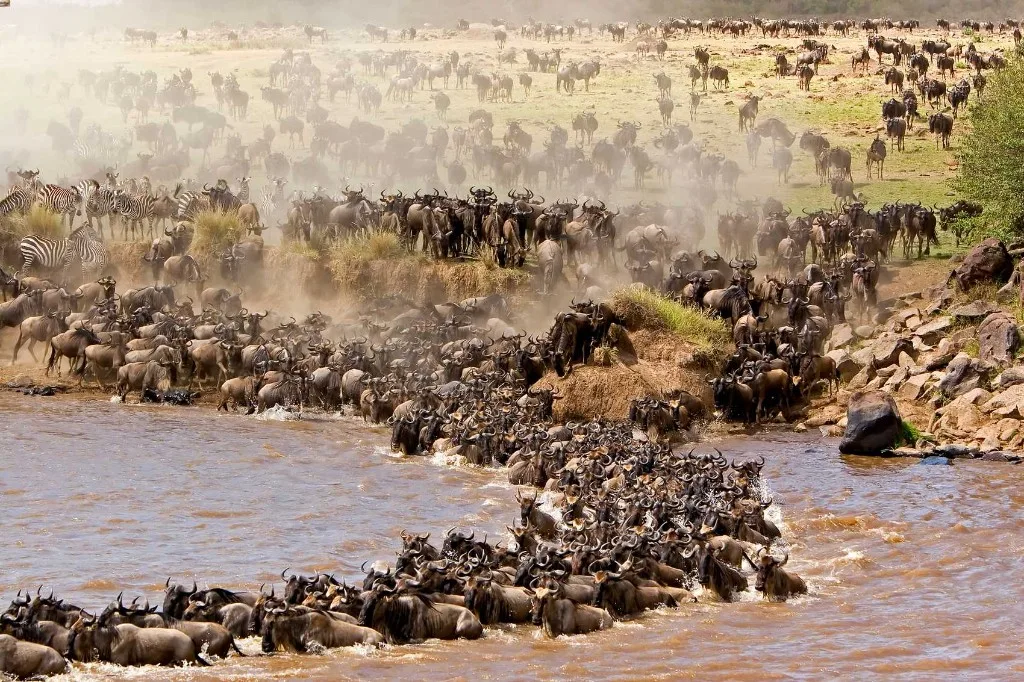
Each year, over a million wildebeest and zebra move through the Serengeti–Masai Mara ecosystem in search of fresh grazing and water. The most dramatic moments come during the river crossings at the Mara River, where survival, instinct and opportunity collide.
Swipe to explore →
 JAN–FEBSouthern SerengetiCalving Season
 MAR–APRSouthern PlainsGreat Calving
 MAYCentral SerengetiMovement Begins
 JUNWestern CorridorHerds Move North
 JULNorthern SerengetiMara River ApproachLate July
 AUG–SEPMasai MaraRiver CrossingsPrime Time
 OCTMasai MaraHerds Remain PossibleNOVEastern SerengetiMovement South
 DECSouthern SerengetiCycle Continues
Migration timing varies each year according to rainfall, grazing and herd movement.
Kenya’s Flagship Safari Destination
The Masai Mara National Reserve is the centerpiece of many Kenya safaris and one of Africa’s most celebrated wildlife destinations. Its rolling grasslands support exceptional populations of lions, cheetahs, leopards, elephants, buffalo, giraffes, hyenas and countless plains animals.
Between roughly July and October, the wider Mara ecosystem also becomes a major stage for the Great Migration, although migration timing changes from year to year. Beyond the national reserve itself, travelers can stay in surrounding conservancies where safari experiences may include walking safaris, night game drives and lower vehicle densities.
Plan by Time
Not every traveler has the same amount of time. Use these starting points to explore itineraries by duration.
2–4 Days
Ideal for Masai Mara, Amboseli, Tsavo or other short extensions.
5–8 Days
Enough time to combine two or three important destinations.
9–14 Days
A stronger choice for travelers who want more varied wildlife areas and a slower pace.
15–21 Days
Explore northern and southern Kenya, private conservancies and beach extensions.
Why Kenya
Kenya offers reliable opportunities to see lions, elephants, buffalo, giraffes, cheetahs, leopards, rhinos, hippos and countless antelope species.
The Masai Mara forms the northern portion of the migration ecosystem and offers the possibility of dramatic river crossings.
Travel from open Mara grasslands to Amboseli swamps, Samburu’s dry country, Rift Valley lakes and the Indian Ocean coast.
A wide network of lodges, tented camps, airstrips and safari routes allows itineraries to be built for many budgets and travel styles.
Kenya combines naturally with Tanzania, Uganda and Rwanda.
Safari itineraries can finish at Diani, Watamu, Mombasa or Zanzibar.
East Africa Combinations
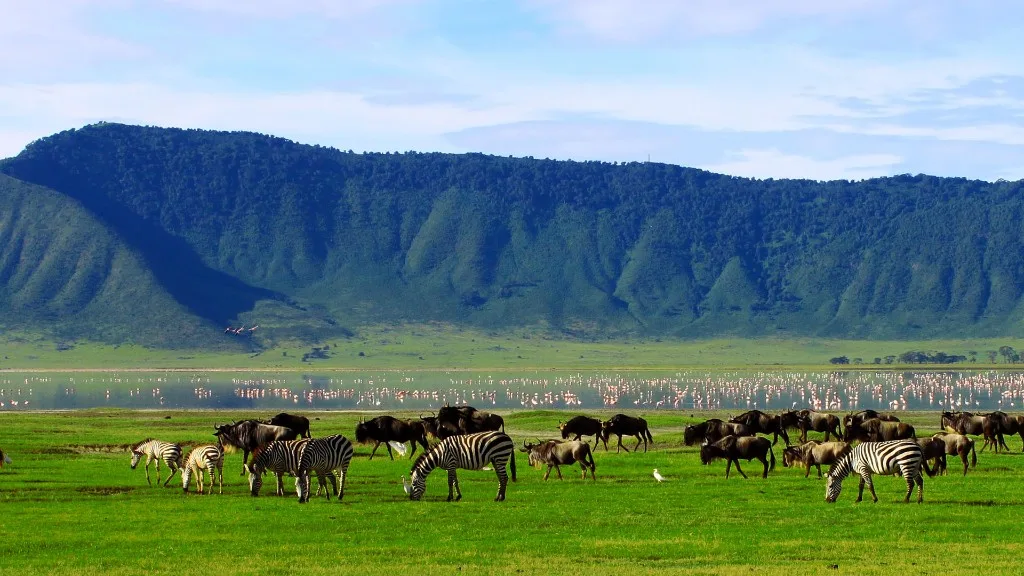
Kenya and Tanzania together create one of Africa’s strongest safari combinations.
Begin in Kenya with the Masai Mara, Amboseli or Samburu before continuing into Tanzania for the Serengeti, Ngorongoro Crater, Tarangire and Zanzibar.
For migration travelers, combining the Masai Mara and Serengeti can provide greater flexibility because the herds move continuously across the wider ecosystem.

Kenya + Primates
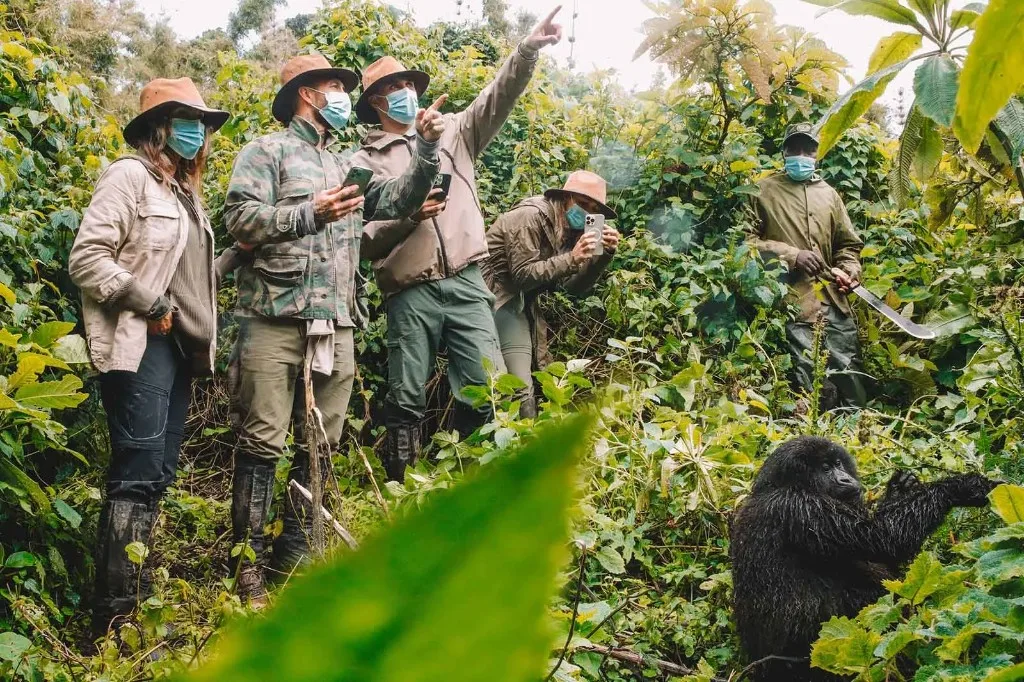
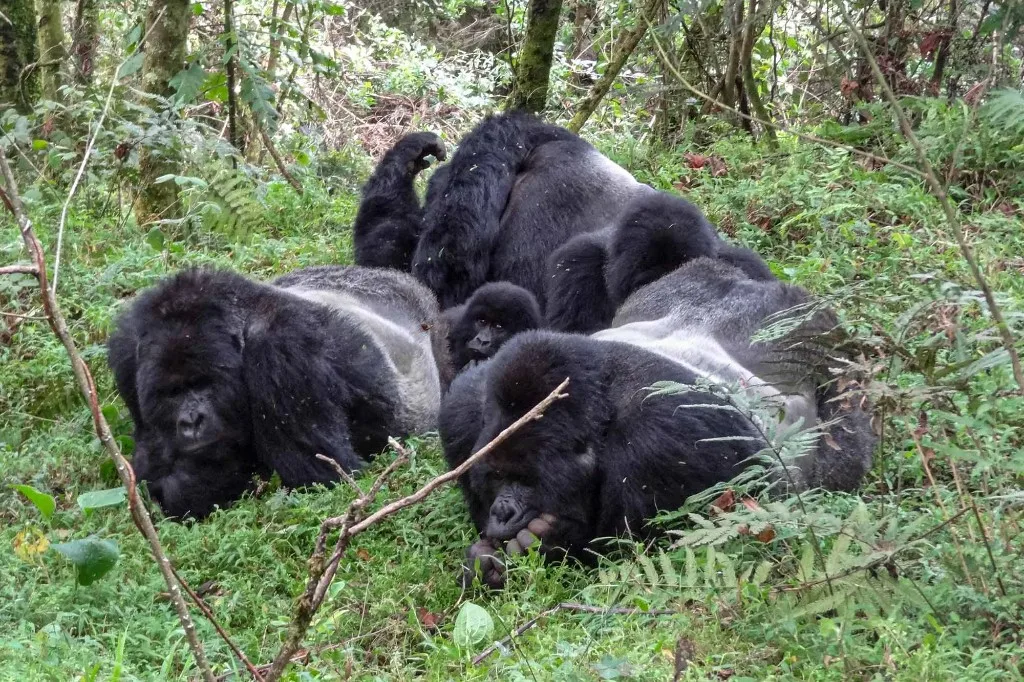
A Kenya safari can also be combined with one of Africa’s most memorable primate experiences.
After watching lions, elephants and wildebeest on Kenya’s plains, fly to Uganda or Rwanda and trek through mountain forests in search of habituated gorilla families.
Beyond Game Drives
Kenya Wildlife
Kenya’s diversity of protected areas creates habitat for an extraordinary range of mammals and birds.
Where to Stay
Safari accommodation ranges from simple camps and comfortable mid-range lodges to some of Africa’s most exclusive tented camps.
Plan Your Journey
Kenya is a year-round safari destination, although conditions change considerably between seasons.
Generally warm and relatively dry in many safari areas. Excellent for wildlife viewing.
Long-rain period. Landscapes become green, visitor numbers may fall and some roads can become challenging.
Dryer conditions begin returning and wildlife viewing improves around permanent water.
Peak safari period and the main season associated with the Wildebeest Migration in the Masai Mara.
Short rains may refresh the landscapes.
A popular festive travel period with green scenery and strong general wildlife viewing.
Safari Budgeting
Kenya safari prices vary with the style of camp, the season, the length of the trip and whether you travel by road or air. Use these starting points, then compare what is actually included.
Simpler camps or lodges, shared or small-group vehicles and mostly road transfers.
Best when wildlife time matters more than the stay.Comfortable lodges or tented camps, usually with a private vehicle and a clear itinerary.
The most common Kenya safari balance.Premium camps, private guiding, smaller vehicles and often fly-in transfers between parks.
Highest service, location and privacy.Plan With Confidence
Good safari planning can make a major difference to the experience.
Explore Kenya Travel GuideRead the complete guide on this page
The Complete Kenya Safari Guide
Kenya is one of the destinations that shaped the modern idea of an African safari. Its appeal is not built around a single national park or one famous animal. Instead, Kenya brings together open savannahs, volcanic landscapes, Rift Valley lakes, semi-arid northern wilderness, mountain scenery, private conservancies and an Indian Ocean coastline within one remarkably varied country. That diversity allows a Kenya safari to be designed in many different ways: a short Masai Mara wildlife break, a week-long classic circuit, a private family safari, a luxury fly-in journey, a Great Migration expedition or a longer East African adventure combining Kenya with Tanzania, Uganda or Rwanda. For many travelers, the Masai Mara is the starting point. Its grasslands are famous for lions, cheetahs, leopards, elephants, buffalo, giraffes, hyenas and large concentrations of plains game.
Approx. 20–25 minute read
In This Guide
Kenya is one of the destinations that shaped the modern idea of an African safari. Its appeal is not built around a single national park or one famous animal. Instead, Kenya brings together open savannahs, volcanic landscapes, Rift Valley lakes, semi-arid northern wilderness, mountain scenery, private conservancies and an Indian Ocean coastline within one remarkably varied country. That diversity allows a Kenya safari to be designed in many different ways: a short Masai Mara wildlife break, a week-long classic circuit, a private family safari, a luxury fly-in journey, a Great Migration expedition or a longer East African adventure combining Kenya with Tanzania, Uganda or Rwanda.
For many travelers, the Masai Mara is the starting point. Its grasslands are famous for lions, cheetahs, leopards, elephants, buffalo, giraffes, hyenas and large concentrations of plains game. During part of the year, the wider Mara–Serengeti ecosystem also hosts the Great Wildebeest Migration. Yet Kenya extends far beyond the Mara. Amboseli is celebrated for elephants and views toward Mount Kilimanjaro. Samburu introduces travelers to northern species and a dramatically drier landscape. Ol Pejeta and Laikipia place conservation, rhinos and private wildlife areas at the center of the experience. Tsavo offers scale and a sense of wilderness, while Lake Nakuru and other Rift Valley destinations add birds, rhinos and contrasting scenery.
A well-planned safari is therefore less about trying to visit every famous park and more about choosing a combination that fits your interests, time and budget. Travelers primarily interested in big cats may spend longer in the Mara. Photographers may favor fewer destinations and more time at each sighting. Families may prefer shorter driving days and lodges with pools or family rooms. Honeymooners may combine intimate tented camps with Diani Beach or Zanzibar. Migration-focused visitors may build their itinerary around the northern Serengeti and Masai Mara while accepting that herd movements remain natural and unpredictable.
Kenya also has a mature safari infrastructure. Nairobi acts as a major regional gateway, and many wildlife areas can be reached by road or scheduled light aircraft. Accommodation ranges from simple camps to highly exclusive lodges. Private conservancies add activities that may not be available in some national reserves, including walking safaris and night drives.
The best Kenya safari is not necessarily the longest or most expensive. It is the itinerary that puts the right amount of time in the right places for the traveler's priorities. Use this guide as a planning framework, then explore the dedicated Kenya Safaris, Kenya Safari Packages, destination, wildlife and travel-guide pages for deeper information.
Kenya works particularly well for first-time safari travelers because it combines famous wildlife areas with a broad choice of itineraries. A visitor can see classic savannah landscapes, search for the Big Five, experience strong predator viewing and add cultural, conservation or beach experiences without needing an extremely long trip.
The Masai Mara is a major advantage. It is one of Africa's best-known big-cat landscapes and supports excellent year-round wildlife viewing. During the migration season, the possibility of seeing large wildebeest herds and river crossings adds another dimension, although crossings can never be guaranteed. Amboseli offers a completely different visual identity: elephant herds moving through open plains and wetlands with Kilimanjaro often forming a dramatic background. Northern Kenya changes the atmosphere again, with Samburu's arid scenery and distinctive wildlife.
Kenya is also strong for travelers who value variety. Rhino-focused visits can include Ol Pejeta or Lake Nakuru. Birders can combine Rift Valley lakes with savannah and northern habitats. Photographers can choose private vehicles and spend longer at sightings. Families can select properties with suitable room configurations and manageable transfer times. Luxury travelers can fly between remote camps, while budget-conscious travelers can use road circuits and simpler accommodation.
Another important advantage is connectivity. Kenya can be combined with Tanzania for the Serengeti, Ngorongoro and Zanzibar, or with Uganda and Rwanda for gorilla trekking. This makes Kenya an effective anchor for a broader East Africa safari.
A useful way to think about Kenya is:
The Masai Mara National Reserve and surrounding conservancies form the centerpiece of many Kenya safaris. The landscape is immediately recognizable: rolling grasslands, scattered acacia trees, riverine woodland and broad horizons that make wildlife relatively easy to observe. The ecosystem supports large numbers of herbivores and a celebrated predator community, making the Mara particularly attractive to travelers hoping to see lions, cheetahs, leopards and hyenas.
The Mara is rewarding outside the migration season as well. Resident wildlife remains throughout the year, and different seasons create different photographic conditions. Dry periods can concentrate animals around water and make vegetation less dense. Greener periods bring dramatic skies, fresh landscapes and newborn animals. Travelers should therefore avoid thinking of the Mara as worthwhile only when wildebeest herds arrive.
During roughly the middle part of the year into the northern autumn, depending on rainfall and herd movement, migrating wildebeest and zebra may enter the wider Mara ecosystem from the Serengeti. The Mara River becomes famous for dramatic crossings, but the migration is much more than a single river event. Herds spread across plains, predators respond to changing prey concentrations, and travelers may witness movement in several parts of the ecosystem.
Choosing where to stay matters. The national reserve provides access to classic game-drive areas and migration country. The Mara Triangle, on the western side, is known for productive wildlife viewing and important river-crossing zones. Private conservancies such as Mara North, Naboisho and Olare Motorogi can offer lower vehicle density and, depending on the property and rules, activities such as guided walks or night drives.
Travelers must also choose between road and fly-in access. Driving from Nairobi allows a gradual transition from city to countryside and can reduce transport costs, but it uses more time. Flying to one of the Mara airstrips can be especially valuable on short or premium itineraries. A light aircraft can also make it easier to combine the Mara with northern Kenya or the coast.
How long should you stay? Two nights can provide a taste, but three or four nights usually allow a more relaxed experience. Migration-focused travelers may benefit from longer stays because river crossings are unpredictable. Photographers often prefer additional nights and a private vehicle, allowing more patience at sightings.
Explore the dedicated Masai Mara, Masai Mara Safaris, Mara Triangle, Mara North Conservancy and Masai Mara Accommodation guides for detailed planning.
The Great Wildebeest Migration is a continuous ecological cycle involving huge numbers of wildebeest along with zebra and other grazing animals moving through the Serengeti–Masai Mara ecosystem. It is often marketed as though it follows a fixed timetable, but the real migration is driven by rainfall, grass and water. The broad seasonal pattern is relatively predictable; exact herd locations and individual river crossings are not.
Early in the year, large concentrations are commonly associated with the southern Serengeti and Ndutu region, where calving creates an extraordinary period of new life and predator activity. As conditions change, herds gradually begin moving through central and western parts of the Serengeti. By the middle of the year, increasing numbers may push toward the northern Serengeti and the Mara River.
The river-crossing period is the stage most closely associated with Kenya. Depending on the season, herds may cross between Tanzania and Kenya, sometimes waiting for hours or days before entering the water. Crossings can be brief, chaotic and dramatic. Crocodiles are present, but many dangers also come from strong currents, steep banks, congestion and the vulnerability of animals once they reach the opposite side.
After reaching the Masai Mara, herds may spread across the ecosystem rather than remaining in one location. Later, movement gradually turns south again as the cycle continues.
For safari planning, this means that travelers should focus on probability rather than promises. A safari scheduled for a traditionally strong migration period can put you in an excellent region, but no operator can truthfully guarantee a particular river crossing at a specific hour or day. Spending more nights in a strategic location generally improves flexibility.
A simplified annual framework is:
Read the complete Wildebeest Migration and Migration Calendar guides before choosing dates.
Explore the Great Wildebeest Migration
Mara River crossings are among the most anticipated wildlife events in East Africa, but they are also among the least predictable. Wildebeest may gather near the river and appear ready to cross, only to retreat. A crossing may begin with a few animals and suddenly trigger thousands more, or it may occur quickly in a location that no safari vehicle can reach in time.
This unpredictability is part of what makes the event so powerful. The Mara River is not a staged attraction. Animals respond to herd pressure, grazing conditions, water levels, terrain and instinct. Crocodiles add danger, but steep banks, currents and crowding can be equally important.
Travelers hoping to witness a crossing should avoid itineraries that allow only a single hurried day in the area. Multiple nights in the northern Serengeti or Masai Mara can increase opportunities, though nothing guarantees success. Guides communicate with other vehicles and use their knowledge of herd positions, crossing points and road networks to decide where to wait.
Photography also requires patience. Long lenses are useful, but wider images can better communicate the scale of a crossing. Visitors should respect guide instructions and avoid pressuring vehicles into positions that interfere with animal movement.
For deeper planning, see Mara River Crossing, Best Time for Mara River Crossing and Mara River Crossing Safaris.
Read the Mara River Crossing guide
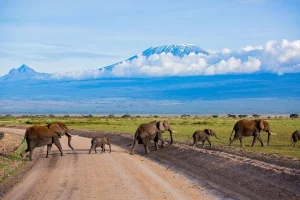
Amboseli National Park offers one of Kenya's most recognizable safari scenes: elephants moving across open country beneath Mount Kilimanjaro. The mountain itself stands across the border in Tanzania, and cloud can obscure it, but when conditions are clear the combination of wildlife and snow-capped summit creates exceptional photographic opportunities.
Amboseli's attraction goes beyond the mountain. Underground water from the Kilimanjaro ecosystem supports wetlands that draw elephants and many other species. The contrast between dry plains, marshes and distant mountain scenery gives the park a distinctive character.
Elephants are the headline species, and Amboseli has a long history of elephant research. Visitors may see family groups feeding, drinking and moving between habitats. Lions, buffalo, giraffes, zebra, wildebeest, hippos and many birds also occur.
Amboseli combines naturally with Nairobi, Tsavo or a longer southern Kenya circuit. It can be reached by road or air. Two nights are common, while photographers or elephant enthusiasts may choose three.
Morning conditions can be especially valuable for Kilimanjaro views before clouds build, though visibility is never guaranteed. Dust and changing light can create striking images during drier periods.
Explore Amboseli National Park, Amboseli Safaris and Best Time to Visit Amboseli for detailed advice.
Explore Amboseli National Park
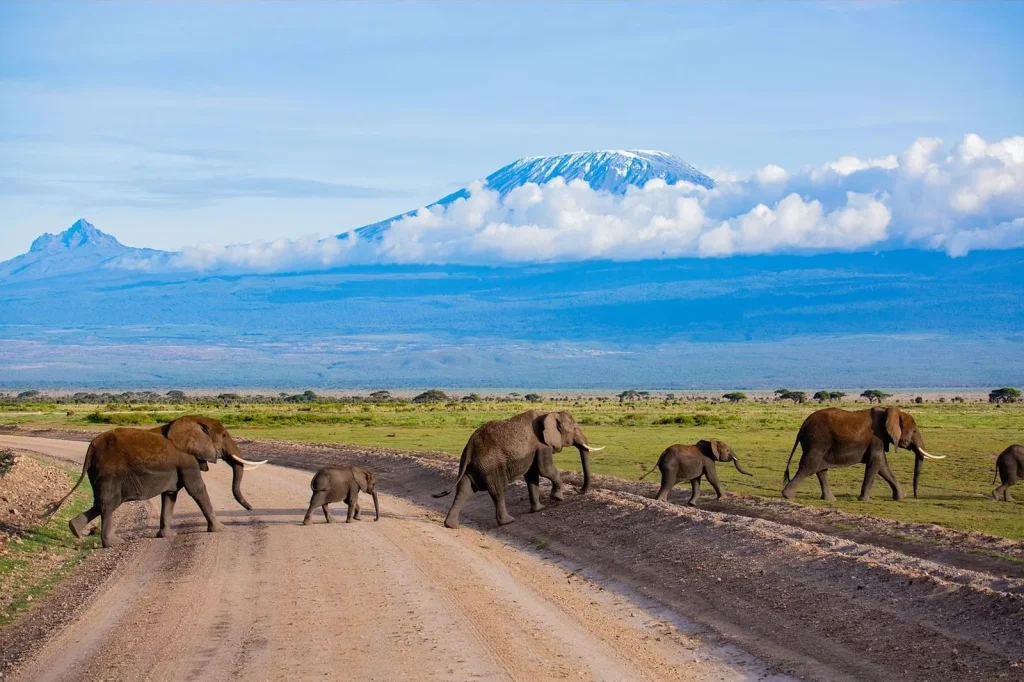
Samburu offers a very different safari atmosphere from the Masai Mara. The landscape is drier and more rugged, with the Ewaso Ng'iro River acting as a lifeline for wildlife. The combination of riverine vegetation, open scrub and arid country produces both beautiful scenery and species that are less commonly encountered in southern Kenya.
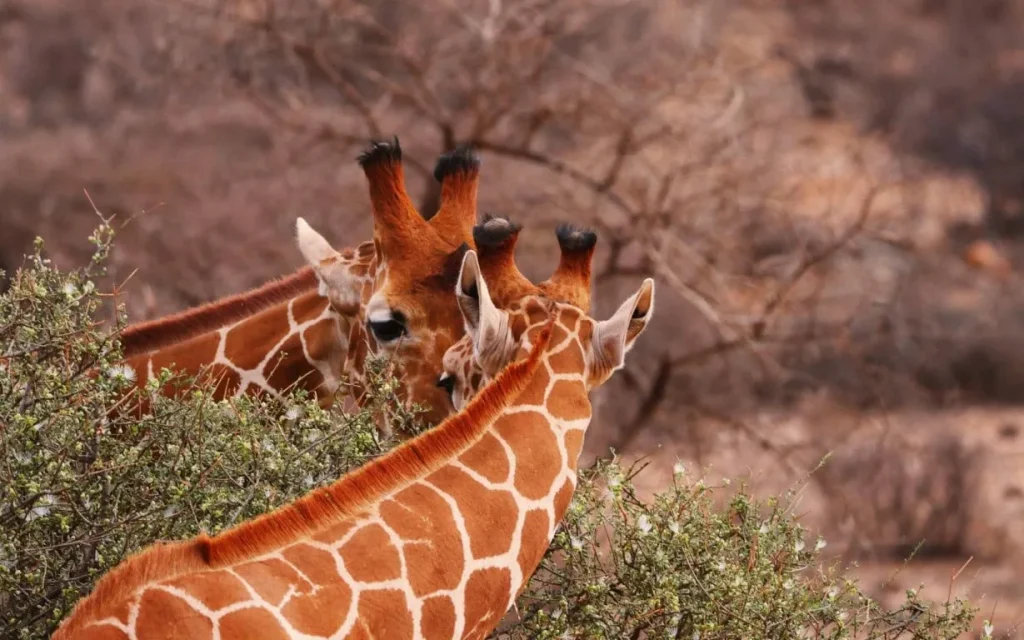
Travelers often come looking for the so-called northern specialties, including Grevy's zebra, reticulated giraffe, gerenuk and Beisa oryx. Elephants are also a major attraction, and predators including lions and leopards may be seen.
The broader region can include Samburu National Reserve, Buffalo Springs and Shaba, depending on the itinerary. Because northern Kenya feels ecologically distinct, it adds meaningful variety to a longer safari rather than simply repeating the Mara experience.
Samburu can be reached by road, but flying is attractive for travelers combining it with the Mara or other distant regions. The dry environment means temperatures can be high, and travelers should prepare for strong sun and dust.
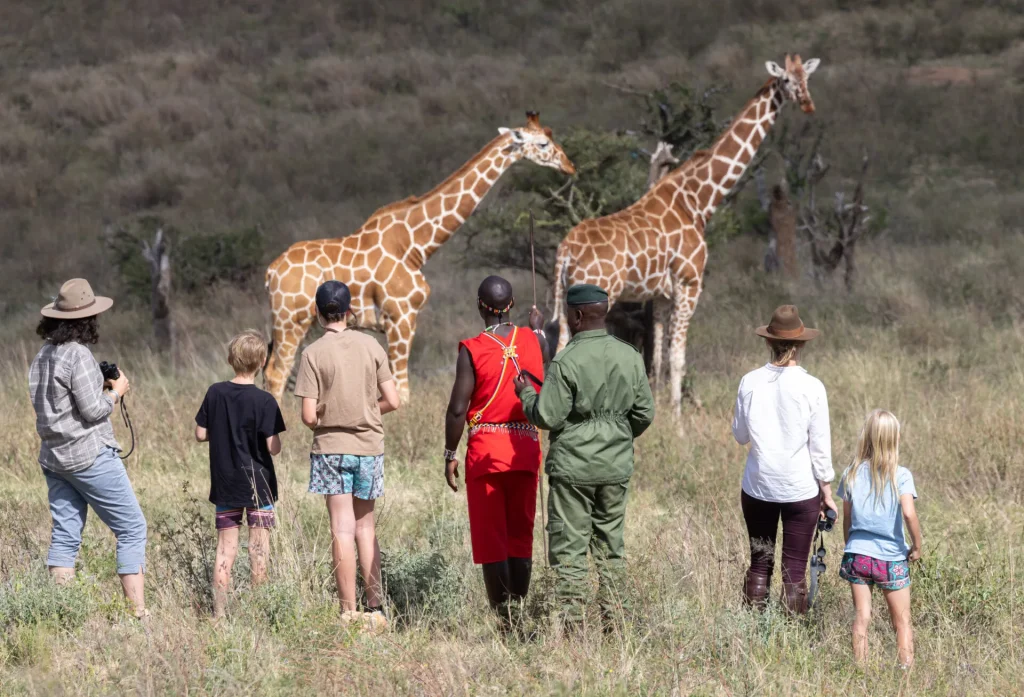
Cultural experiences should be approached respectfully and arranged in ways that benefit host communities rather than treating people as attractions. A good itinerary balances wildlife, landscape and meaningful local context.
Explore Samburu National Reserve
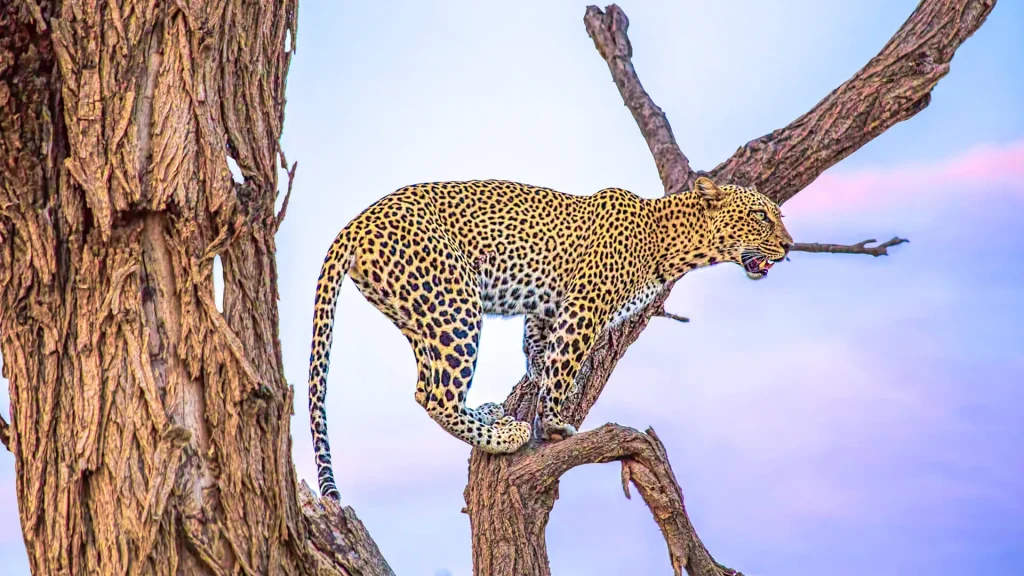
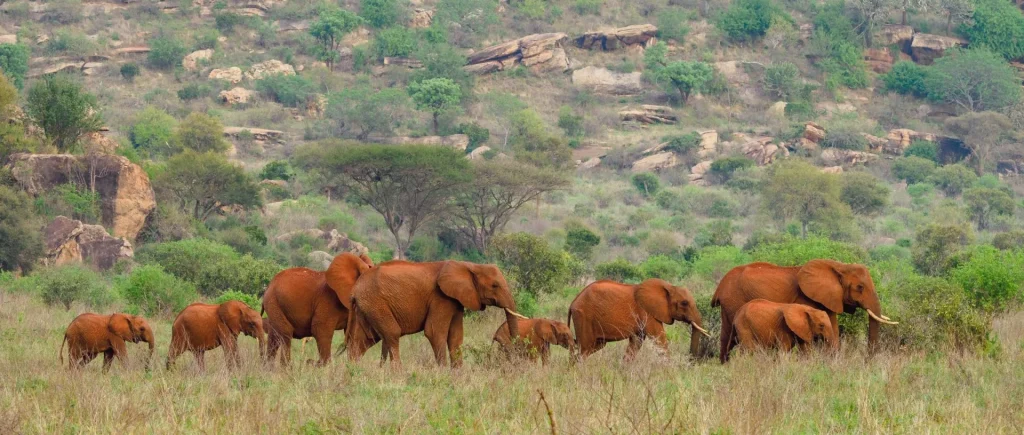
Tsavo is vast. Together, Tsavo East and Tsavo West form one of Kenya's largest protected landscapes and offer a sense of scale that differs from smaller, more concentrated safari destinations.
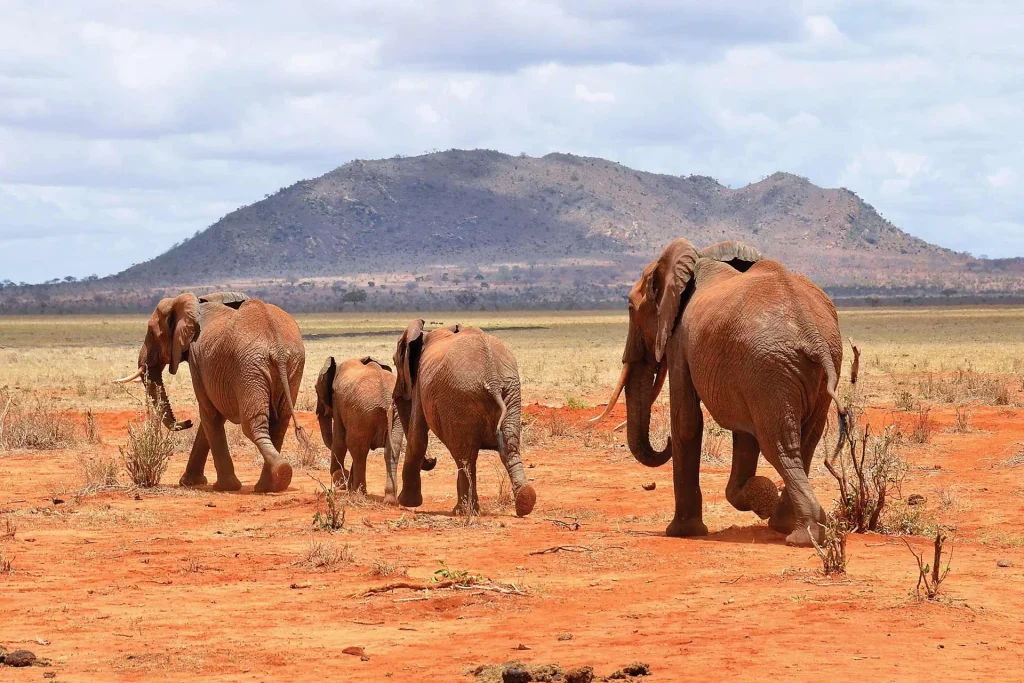
Tsavo East is associated with broad open spaces, red soils and elephants that often appear dusted in the landscape's distinctive color. The park can feel expansive and wild, rewarding travelers who value scenery and the experience of covering large natural areas.
Tsavo West is more varied in topography, with volcanic features, hills and springs. Mzima Springs is one of its best-known attractions. The park's denser terrain can make wildlife less immediately visible than in open grasslands, but the scenery is part of its appeal.
Tsavo works especially well in itineraries linking Nairobi or Amboseli with the Kenyan coast. Travelers ending in Diani, Mombasa or nearby beach areas can create a safari-and-beach route without returning to the same inland path.
The region supports elephants, lions, buffalo, giraffes, antelopes and many other species. Tsavo is not simply a substitute for the Mara; it is a different kind of safari experience, emphasizing space, landscape and wilderness.
Explore Tsavo East National Park
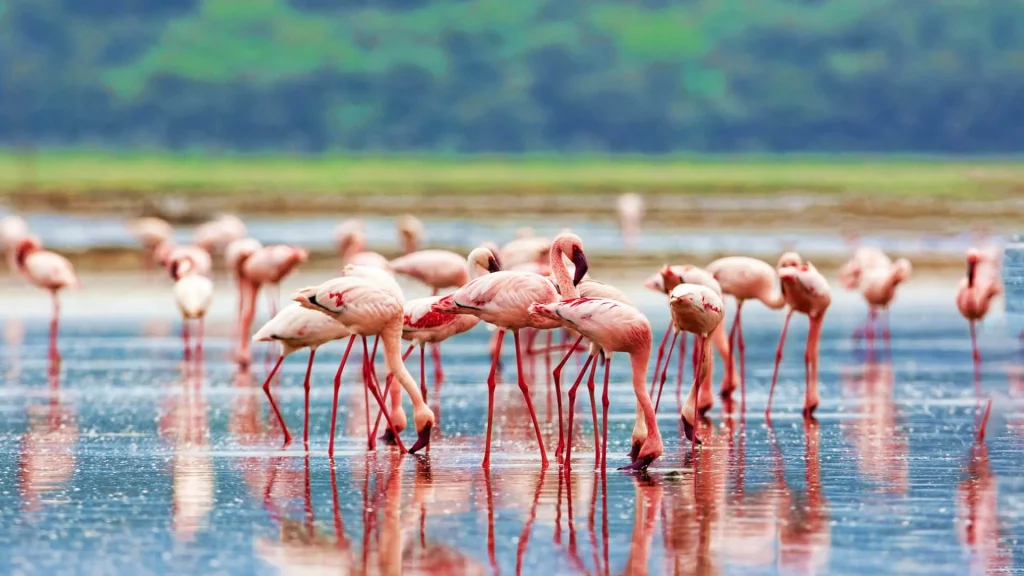
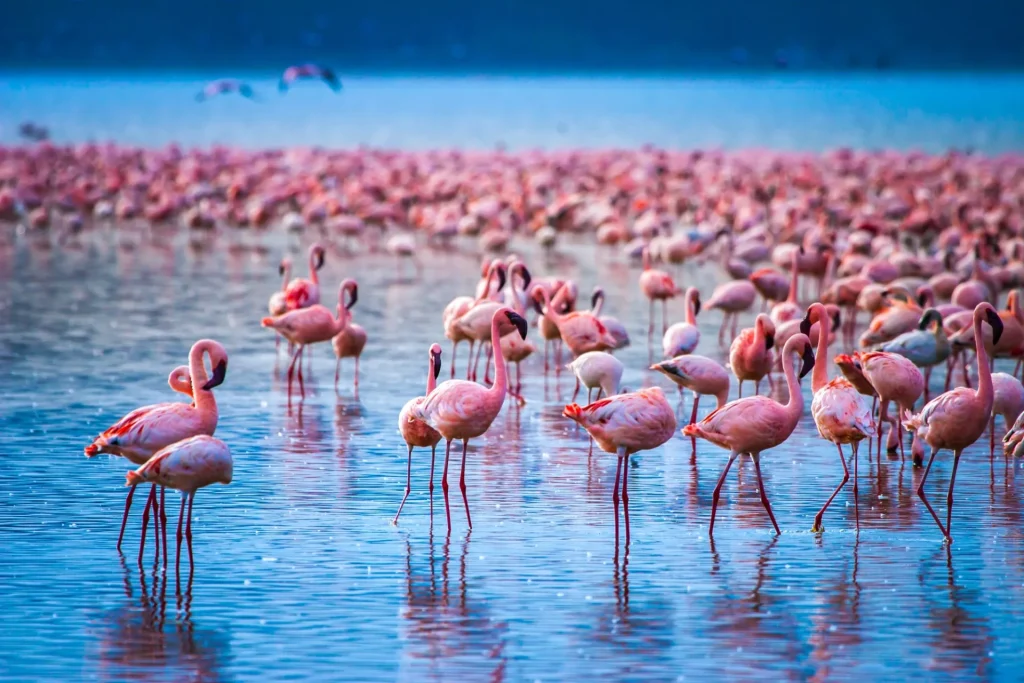
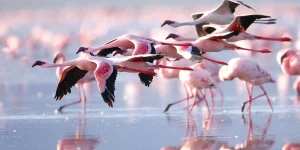
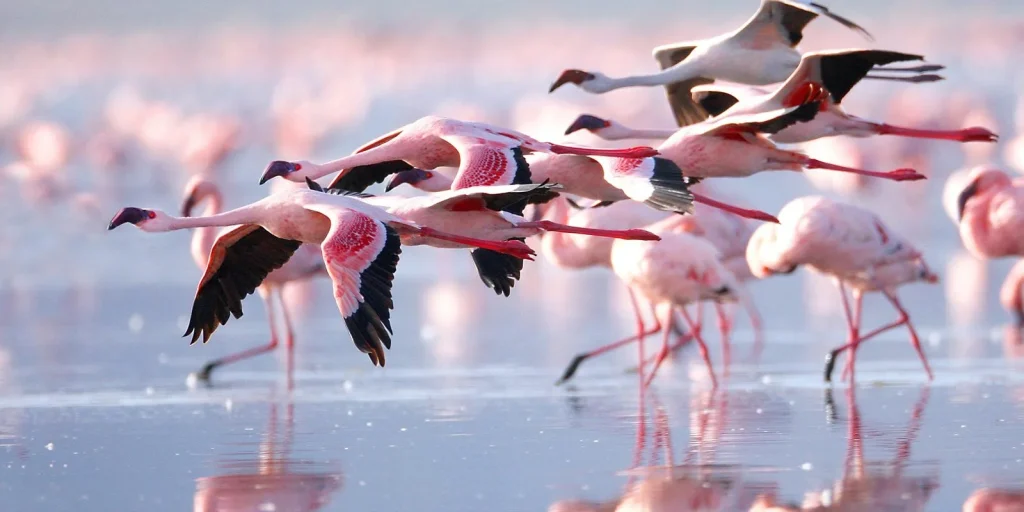
Kenya's Rift Valley provides useful contrasts between major savannah parks. Lake Nakuru National Park is compact compared with the Mara or Tsavo, making it possible to explore a substantial portion of the park within a shorter stay. It is particularly associated with rhinos and birdlife, while changing lake conditions influence flamingo numbers over time.
The park's woodland, grassland and lakeshore habitats support buffalo, giraffes, antelopes and predators as well. Lake Nakuru often fits naturally into a road itinerary between Nairobi and the Masai Mara.
Lake Naivasha offers a different experience. Boat trips can provide views of hippos and waterbirds, while nearby areas such as Crescent Island or Hell's Gate can add walking, cycling or scenic activities depending on current conditions and operating arrangements.
These destinations are useful for travelers who want to break long road journeys and add non-traditional safari activities. They can also broaden a birding itinerary or create a more varied family program.
Explore Lake Nakuru National Park
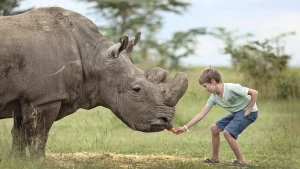
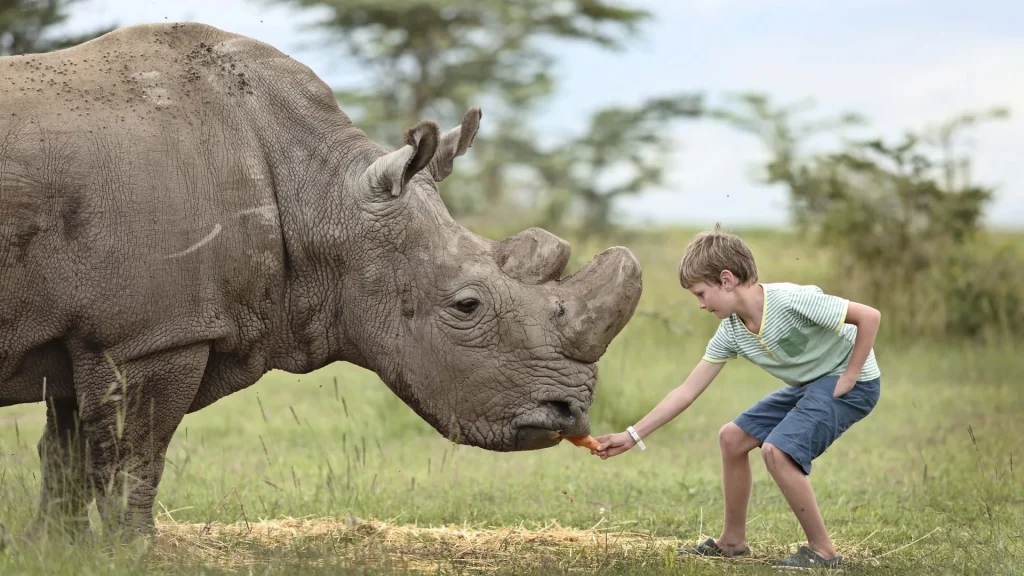
Central Kenya's conservation landscapes offer some of the country's most interesting alternatives to conventional national-park safaris. Ol Pejeta Conservancy is especially well known for rhino conservation and provides strong opportunities to learn about endangered species alongside normal game viewing. It also hosts a chimpanzee sanctuary, giving visitors an unusual primate component within a Kenya safari.
Lewa Wildlife Conservancy has played an important role in rhino and wildlife conservation and is associated with high-quality safari experiences. The wider Laikipia region includes private and community conservation areas, ranches and lodges offering a broad range of activities.
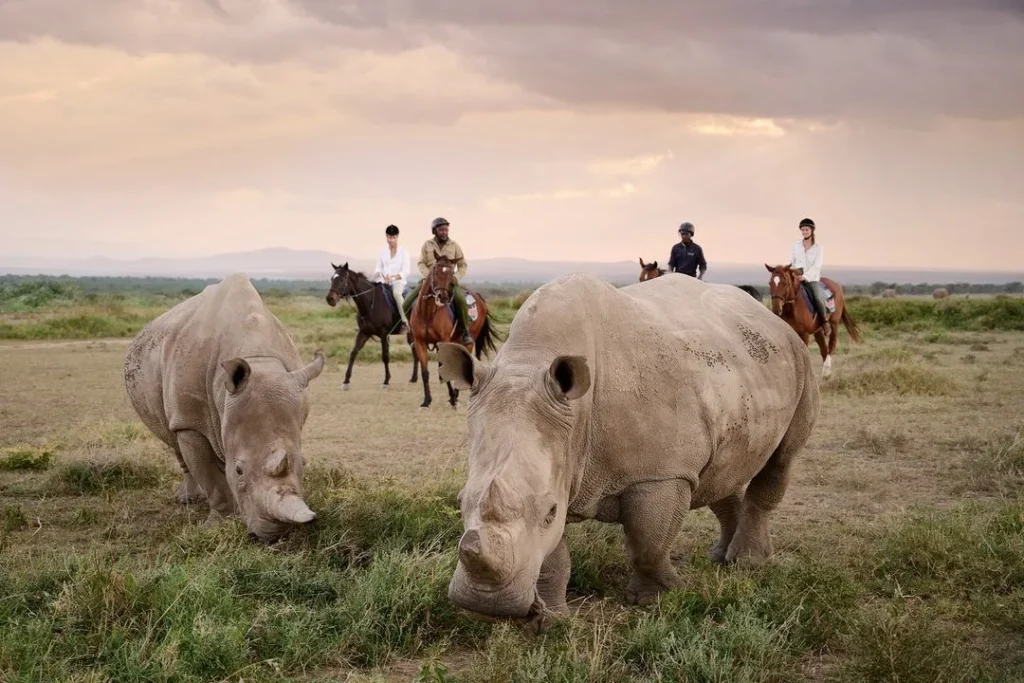
Because these are not simply conventional national parks, experiences may include guided walks, night drives, horseback riding or conservation-focused visits depending on the property. This makes Laikipia especially attractive to repeat safari travelers or those seeking more variety than standard vehicle-based game drives.
The region can also work well for luxury and family travel. Some properties provide highly personalized activities, while the lower density of vehicles can create a more private atmosphere.
Travelers interested in conservation should look beyond marketing labels and consider how each property works with wildlife, local communities and land management.
There is no single best month for every Kenya safari. The right time depends on whether your priority is the Great Migration, general wildlife, photography, lower visitor numbers, green landscapes, beach weather or price.
January and February are often attractive safari months in many areas. Conditions can be relatively dry, wildlife viewing is strong, and the period sits outside the main Mara migration season. It can be an excellent choice for travelers interested in general wildlife rather than river crossings.
March to May is associated with the long rains. Rainfall patterns vary by region and year, and it does not necessarily rain continuously. Landscapes can become beautifully green, skies dramatic and visitor numbers lower. However, some roads can become more challenging, and certain camps may close seasonally.
June is a transition toward drier conditions in many safari areas. Vegetation begins to change and the peak northern migration period approaches.
July to October is one of Kenya's most popular safari periods. Drier conditions often support excellent wildlife viewing, and migrating herds may reach the Masai Mara. August and September are commonly associated with strong Mara migration opportunities, but exact timing changes annually.
November often brings short rains. The landscape can refresh quickly, creating greener photographic conditions and potentially fewer visitors than during peak migration months.
December is popular around the festive season. General wildlife remains rewarding, and many areas are green after seasonal rain.
For the coast, weather patterns differ from inland safari regions, so a safari-and-beach itinerary should consider both components. Travelers sensitive to heat, rain or crowds should plan accordingly.
The best strategy is to choose dates around your highest-priority experience and then select destinations suited to those dates. See the full Best Time to Visit Kenya guide and month-specific pages for more detail.
| Month | General safari character | Migration focus |
|---|---|---|
| January | Often warm and relatively dry; strong general wildlife | Southern Serengeti |
| February | Excellent wildlife in many Kenya areas | Calving period in southern Serengeti |
| March | Transitional; rains may begin | Southern/central movement |
| April | Green season; lower visitor density in many areas | Gradual northward movement |
| May | Green landscapes and seasonal rain | Central/western Serengeti |
| June | Drier conditions developing | Western and northern movement |
| July | Popular safari season | Northern Serengeti / Mara approach |
| August | Peak demand in the Mara | River-crossing opportunities |
| September | Excellent Mara wildlife | Herds may be widespread in Mara |
| October | Strong general safari conditions | Mara/northern Serengeti possible |
| November | Short-rain period in many areas | Southward movement |
| December | Green landscapes and festive demand | Southern movement continues |
This table is a planning guide, not a guarantee. Weather and migration behavior vary from year to year.
Kenya safari prices vary widely because a safari is a bundle of many costs rather than a single standardized product. Two itineraries of the same duration can have very different prices depending on accommodation, season, vehicle arrangements, park fees, flights and group size.
Duration is one of the clearest factors. Every additional day adds accommodation, guiding, transport and often park or conservancy fees.
Season matters significantly. Migration months and festive periods can command higher accommodation rates. Green-season travel may offer better value at some properties.
Accommodation level has a major impact. Budget camps prioritize function and access. Mid-range lodges add comfort and amenities. Luxury properties may offer premium locations, small guest numbers, high staff-to-guest ratios and more inclusive activities.
Private versus shared travel also changes cost. A private vehicle gives flexibility but the vehicle and guide cost is divided among fewer people. Families or groups can sometimes achieve strong value because several travelers share transport.
Road versus fly-in transport is another important variable. Road safaris are generally more economical and allow travelers to see the countryside. Light-aircraft flights save time but increase the budget.
Park and conservancy fees can be substantial and should be clearly included or excluded in quotations. Travelers should compare what a price actually covers rather than choosing only by headline amount.
When reviewing a proposal, check whether it includes accommodation, meals, vehicle, guide, fuel, park fees, domestic flights, airport transfers and specified activities. Also check what remains excluded, such as international flights, visas, tips, insurance and optional experiences.
For current planning, use the dedicated Kenya Safari Cost page and request a quotation based on actual travel dates.
A budget safari and a luxury safari can visit the same wildlife areas, but the experience around the game drives may be very different.
| Feature | Budget | Mid-range | Luxury |
|---|---|---|---|
| Accommodation | Simple camps/lodges | Comfortable lodges and tented camps | Premium camps and lodges |
| Transport | Commonly road-based | Road or mixed | Often fly-in or premium private road |
| Vehicle | Shared or private depending on package | Frequently private on tailor-made trips | Usually highly personalized |
| Location | May be outside reserve or in simpler sites | Good access to parks | Often prime or private locations |
| Dining | Functional/standard | Comfortable full-board style | More elaborate and personalized |
| Activities | Core game drives | Game drives plus selected extras | Broader property-dependent activities |
"Budget" should not mean unsafe or poorly managed. A good budget safari simply allocates more of the traveler's money toward access, guiding and wildlife while using simpler accommodation.
Mid-range is often the strongest balance for travelers who want comfortable rooms, good meals and reliable locations without paying for premium luxury.
Luxury becomes valuable when travelers prioritize exclusivity, exceptional locations, fly-in convenience, small camps, private experiences or very high service levels.
A road safari allows travelers to experience the changing Kenyan landscape between parks. It can be cost-effective, flexible and ideal for circuits linking destinations that sit naturally along the same route. The trade-off is time: some transfers are long, and road conditions vary.
A fly-in safari uses scheduled light aircraft to connect Nairobi or other hubs with safari airstrips. This can transform a short holiday by reducing transfer time and allowing more hours in wildlife areas. It is particularly attractive for the Masai Mara, Samburu, Laikipia and premium combinations.
Flying also has limitations. Baggage allowances on light aircraft can be restrictive, flights operate on schedules and may make multiple stops, and the cost is higher.
Many of the best itineraries combine both methods: drive through destinations where the route itself adds value, then fly when the distance would otherwise consume most of a day.
A Kenya safari can work at several lengths.
3–4 days: Best for one primary destination such as the Masai Mara or Amboseli. This is suitable for travelers adding safari to a business trip, beach holiday or broader African journey.
5–7 days: Enough time for two or three complementary areas. A classic example might combine the Masai Mara with Lake Nakuru or Amboseli.
8–10 days: A strong length for a first comprehensive Kenya safari. Travelers can include several ecosystems without changing lodges every night.
11–14 days: Allows a slower pace, additional conservancies, northern Kenya or a beach component.
15–21 days: Suitable for travelers who want a grand circuit, specialist photography, multiple conservancies, cultural experiences or a substantial coast extension.
More destinations do not automatically make a better safari. Spending two nights everywhere can create constant packing and transfers. In wildlife-rich areas such as the Mara, three or four nights often provide a more rewarding rhythm.
Kenya has one of Africa's broadest ranges of safari accommodation. Understanding the categories helps travelers choose based on experience rather than star labels alone.
Safari lodges are permanent properties that may include larger rooms, restaurants, pools and family facilities. They can be excellent for families and travelers who prefer conventional hotel comfort.
Tented camps range from simple canvas rooms to extremely luxurious suites. "Tented" does not necessarily mean basic; many high-end camps include en-suite bathrooms, permanent floors, excellent dining and personalized service.
Migration camps may be positioned to take advantage of seasonal wildlife movement. Location is crucial, but travelers should remember that animals move naturally.
Conservancy camps can provide access to private or community conservation areas with lower vehicle density and additional activities.
When comparing properties, consider location, transfer time, game-drive access, room configuration, power arrangements, meal style, included activities and whether the camp is inside a reserve, outside a gate or in a private conservancy.
A less expensive lodge in a strategic location can sometimes provide a better safari than a more luxurious property requiring long daily drives to wildlife areas.
Kenya's wildlife diversity is one of the main reasons travelers return.
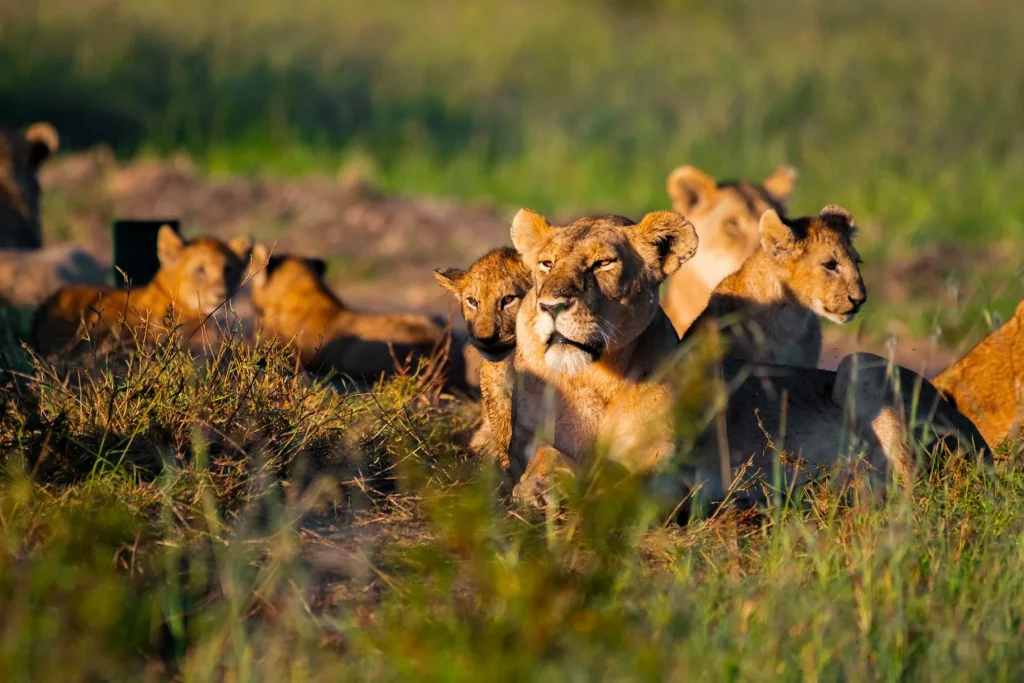
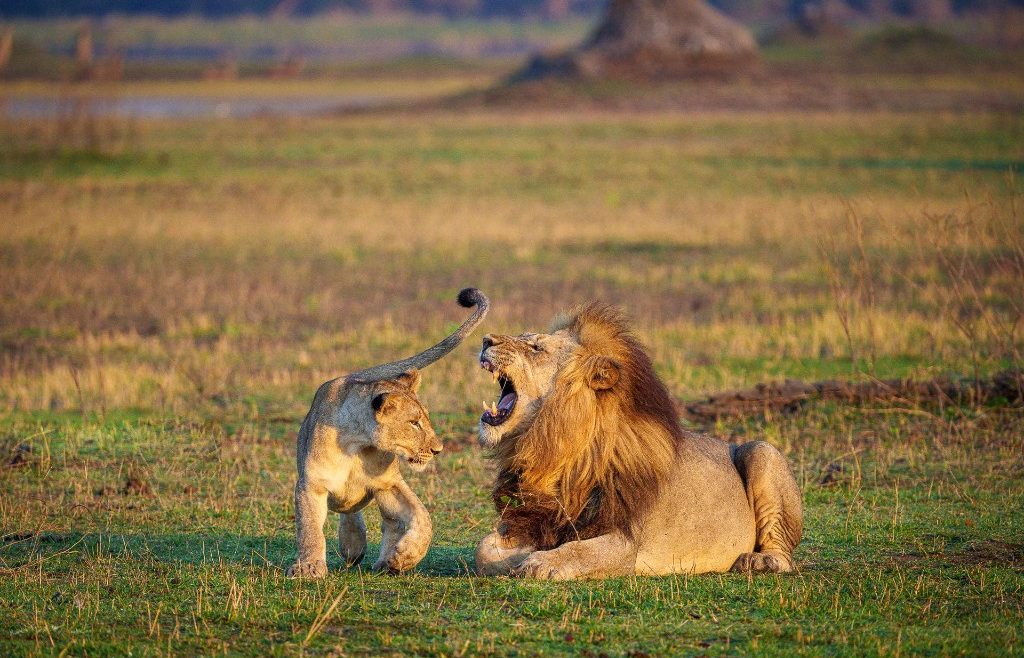
Lions are especially associated with the Masai Mara, though they occur in many protected areas.
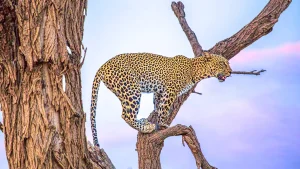
Leopards are more secretive. Riverine woodland and rocky or wooded habitats can provide good opportunities, but sightings are never guaranteed.
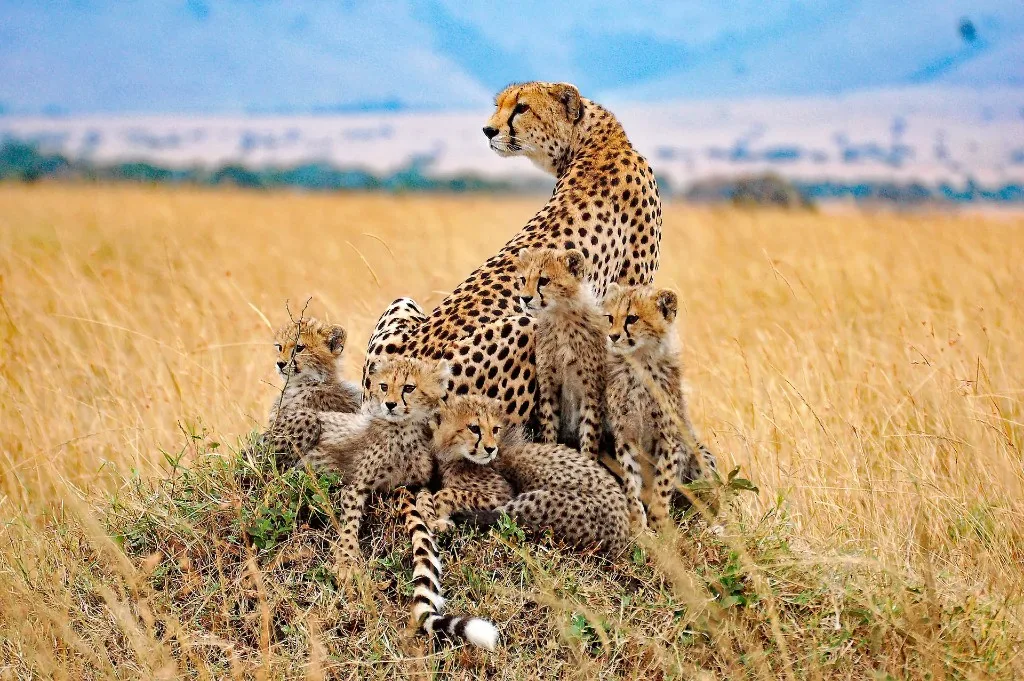
Cheetahs favor open terrain where speed is an advantage. The Mara is one of Kenya's best-known cheetah landscapes.
Elephants occur across several regions, with Amboseli and Tsavo particularly famous for them.
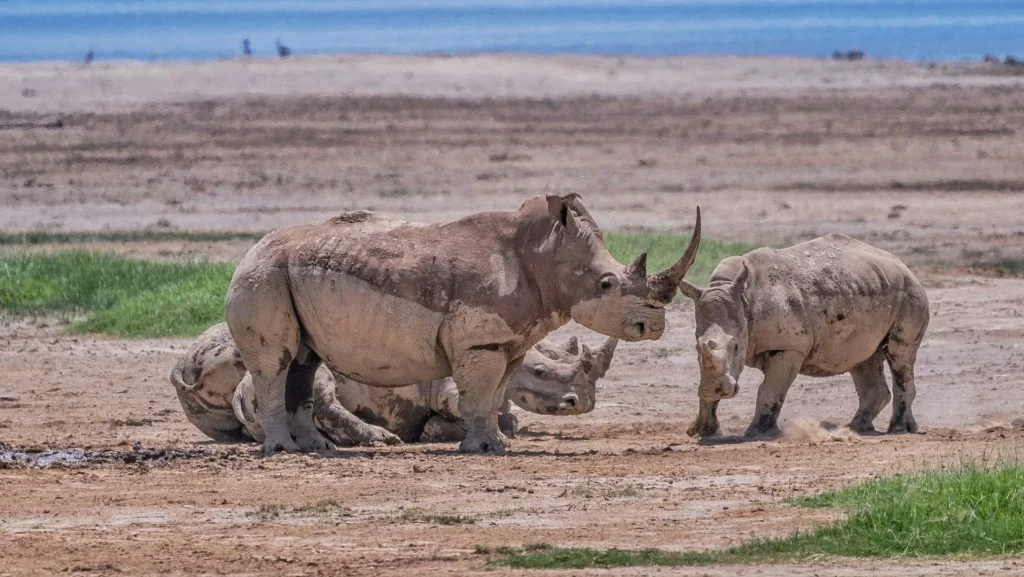
Rhinos require more targeted planning. Ol Pejeta and Lake Nakuru are among the important destinations for travelers prioritizing rhino viewing.
Buffalo are widespread in suitable habitats and complete the Big Five alongside lion, leopard, elephant and rhino.
Giraffes add another layer of regional diversity, with different forms occurring in different parts of Kenya.
Wildebeest and zebra are famous for migration, but resident populations also occur outside the migrating herds.
Hyenas are ecologically important predators and scavengers and can provide some of the most fascinating behavioral sightings on safari.
African wild dogs are less predictable but may be encountered in suitable conservation landscapes.
Hippos and crocodiles are associated with rivers and lakes, including the Mara River and other aquatic habitats.
Kenya is also exceptional for birds. Even travelers who do not consider themselves birders often become interested once guides begin identifying eagles, rollers, hornbills, kingfishers, vultures and waterbirds.
The traditional Big Five are lion, leopard, elephant, buffalo and rhino. The term originated in hunting history, but modern safari travelers use it as a wildlife-viewing checklist.
Kenya offers opportunities to see all five, but not necessarily in one park. The Masai Mara is excellent for lions and can produce leopard, buffalo and elephant sightings. Rhino viewing is more reliable in specialized conservation areas such as Ol Pejeta or Lake Nakuru.
Travelers focused on the Big Five should therefore choose a route that combines complementary destinations rather than expecting one reserve to deliver every species on demand.
The real value of safari, however, goes beyond a checklist. A long observation of cheetahs hunting, elephants interacting, hyenas communicating or giraffes moving through sunrise light can be more memorable than briefly ticking off another Big Five animal.
Kenya can be an excellent family safari destination when the itinerary is designed around children's ages and attention spans. Private vehicles are especially useful because families can adjust game-drive length, return to camp when needed and avoid pressure from unrelated travelers.
Choose lodges with family rooms or interconnected units, swimming pools where appropriate and flexible meal times. Avoid building a schedule that requires very long drives on consecutive days.
Older children may enjoy wildlife identification, photography, conservation activities and cultural visits. Some properties have age restrictions for walking safaris or other activities, so these should be checked before booking.
A beach extension can work particularly well for families, allowing several active safari days followed by relaxed time at Diani or another coast destination.
A Kenya honeymoon can combine adventure with privacy and comfort. The most romantic itineraries usually avoid excessive movement and instead choose a few excellent camps where couples can settle into the safari rhythm.
Private game drives, small tented camps, bush breakfasts, sundowners and special dinners can add memorable touches. A hot-air balloon safari over the Mara is popular for special occasions, although it should be booked based on personal interest rather than treated as compulsory.
Combining safari with the coast is especially effective. After early starts and game drives, several nights on Diani Beach, Watamu or Zanzibar create a contrasting second half.
The best honeymoon itinerary should still prioritize wildlife quality. Romantic extras are most valuable when built around a strong safari route.
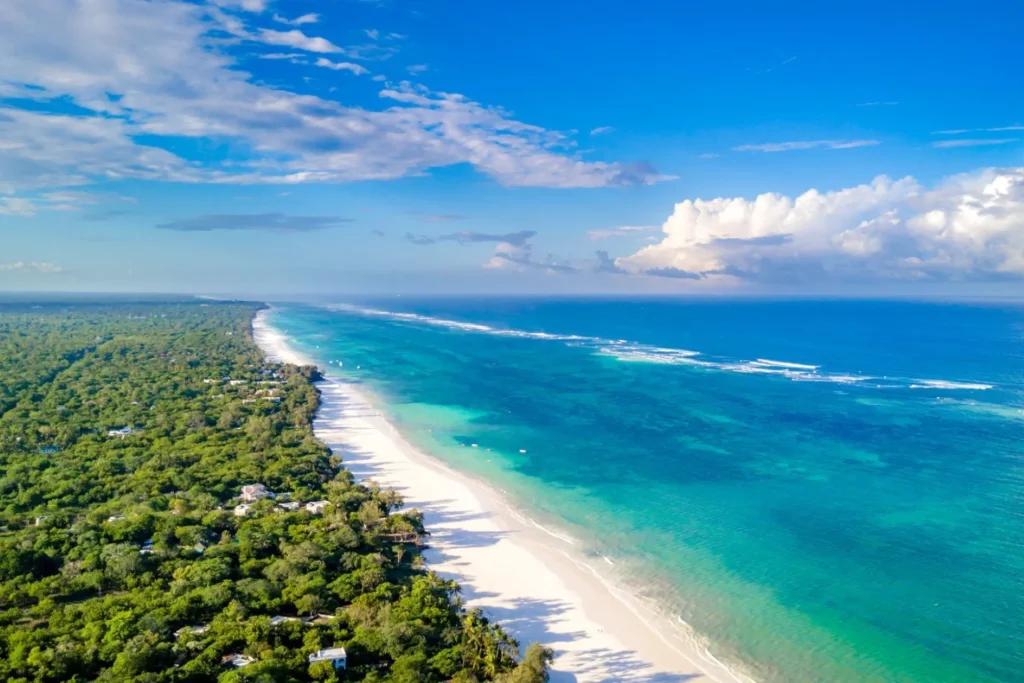
Kenya makes safari-and-beach travel unusually straightforward. After exploring inland wildlife areas, travelers can continue to the Indian Ocean for swimming, relaxation, marine activities and a slower pace.
Diani Beach is one of the best-known options, with a long stretch of white sand and a broad range of hotels and resorts.
Watamu offers a different atmosphere and access to marine environments and coastal attractions.
Mombasa serves as a major coast gateway and can be incorporated depending on flights and accommodation.
Travelers can also combine Kenya with Zanzibar in Tanzania, particularly on multi-country itineraries.
The ideal order is often safari first and beach second. Safari days involve early mornings and active schedules; the coast provides a natural place to unwind before flying home.
Kenya and Tanzania form one of Africa's strongest multi-country safari combinations. The Masai Mara and Serengeti belong to the same greater ecosystem, while Tanzania adds Ngorongoro Crater, Tarangire, Lake Manyara and Zanzibar.
Migration-focused travelers may benefit from combining the Mara with northern Serengeti because herds move across the international boundary according to natural conditions. A two-country itinerary cannot guarantee crossings, but it can broaden the range of habitats and wildlife experiences.
The route needs careful logistical planning. Travelers cannot simply drive freely across every point of the ecosystem; border procedures, vehicle arrangements and flight options determine the practical itinerary.
A common approach is to connect the Mara and Serengeti through designated transfer routes or flights, then continue toward Ngorongoro and northern Tanzania. Another option is to safari in Kenya and then fly onward to Tanzania or Zanzibar.
Because both countries have exceptional wildlife, avoid overloading the itinerary. A well-paced 10–14 day Kenya–Tanzania safari is often more rewarding than trying to visit every famous park in a week.
Combining Kenya with gorilla trekking creates one of East Africa's most contrasting wildlife journeys. The safari begins on open plains among lions, elephants, giraffes and antelopes, then shifts to mountain or rainforest environments where travelers trek on foot to visit habituated gorilla families.
Uganda offers gorilla trekking primarily in Bwindi Impenetrable National Park and Mgahinga Gorilla National Park. Rwanda offers trekking in Volcanoes National Park. Each destination has different routing, permit costs and accommodation options.
A popular combination is the Masai Mara followed by a flight connection toward Entebbe or Kigali. Longer itineraries can add chimpanzee trekking, Queen Elizabeth National Park or other Uganda wildlife areas.
Gorilla trekking is physically different from a vehicle safari. Trails can be steep, muddy and humid, and trek duration varies depending on gorilla location. Travelers should prepare appropriately and understand current permit and health requirements before booking.
Safari packing should focus on comfort, layers and practicality.
Choose lightweight, neutral-colored clothing that can be worn in layers. Early mornings may feel cool, while midday can become warm. A light fleece or jacket is useful for dawn game drives.
Bring a hat, sunglasses and sunscreen. Comfortable closed shoes are adequate for most vehicle safaris, while walking-focused itineraries may require more supportive footwear.
Binoculars greatly improve wildlife viewing, even when guides carry a pair. Photographers should bring suitable lenses, spare batteries, memory cards and dust protection.
A small day bag is useful inside the vehicle. Carry essential medication in hand luggage and bring charging equipment appropriate to your devices.
Avoid overpacking, particularly on fly-in safaris where baggage limits may be strict and soft-sided bags are often preferred.
Kenya is an outstanding photography destination because wildlife, landscape and light combine so effectively. The key to better safari photography is often time rather than equipment.
A telephoto lens is useful for portraits and distant animals, while a wider lens helps capture wildlife within the landscape. Bean bags can provide support from a safari vehicle, and some specialist vehicles offer photography mounts.
Morning and late-afternoon light is generally softer and more dramatic. Midday can still produce important behavior, so photographers should not assume every useful image happens at sunrise.
Dust is a practical concern. Minimize unnecessary lens changes, protect equipment and carry cleaning tools.
A private vehicle can be valuable because photographers may want to spend much longer at one sighting than general safari groups. Communicate your priorities to the guide: eye-level positioning, backlighting, behavior, birds or landscape images may require different decisions.
Most importantly, photography should never override animal welfare or park rules.
A private safari guide and vehicle can substantially change the experience. Instead of following a fixed group schedule, travelers can adjust departure times, spend longer at sightings and focus on personal interests.
This is particularly useful for photographers, families, birders and travelers with specific wildlife goals. If one guest wants to watch a leopard for an hour, a private vehicle makes that possible without negotiating with unrelated passengers.
Private travel also allows more control over transfer stops and daily pacing. It does not mean every aspect is unrestricted; park rules, lodge schedules, road conditions and wildlife behavior still shape the day.
The guide remains one of the most important elements of the safari. Strong wildlife knowledge, ethical behavior, driving skill and communication can matter as much as the vehicle or lodge.
Responsible safari travel begins with respecting wildlife. Keep appropriate distances, avoid blocking animals and follow guide instructions. Never encourage a driver to pressure wildlife for a photograph.
Do not feed wild animals or leave litter. Noise should be minimized around sensitive sightings.
Conservation fees, responsible lodges and locally employed guides can contribute to the protection of wildlife areas, but travelers should still ask questions about how tourism benefits communities and ecosystems.
Cultural visits should be respectful, consensual and economically meaningful to host communities. Avoid treating people as photographic props.
Choose operators and properties that take safety, staff welfare and environmental management seriously. Responsible travel is not about achieving perfection; it is about making better choices and recognizing that safari tourism exists within living landscapes shared by wildlife and people.
Planning becomes easier when decisions are made in the right order.
Start with dates or a broad month. If migration is your priority, build around the relevant seasonal region.
Separate international travel days from actual safari days.
Big cats, elephants, migration, rhinos, photography, family activities, luxury, culture or beach time may lead to different routes.
Avoid adding parks only because their names are famous.
Budget, mid-range and luxury choices can often be mixed strategically.
Consider both time and budget.
Tanzania, gorilla trekking or the coast can be excellent, but each needs enough time.
Check park fees, meals, transfers, flights and activities.
Confirm current entry, health and travel requirements from official sources before departure.
Safari is most rewarding when travelers understand that nature does not follow a script.
Kenya can deliver many different safaris within one destination. The Masai Mara provides classic savannah wildlife and seasonal migration opportunities. Amboseli brings elephants and Kilimanjaro scenery. Samburu adds northern species and arid landscapes. Tsavo offers scale, while Ol Pejeta, Lewa and Laikipia add conservation-focused experiences. The Rift Valley creates useful contrasts, and the Indian Ocean coast makes it easy to finish with several days of relaxation.
The most important planning decision is not how many famous names can fit into the itinerary. It is how well the route matches your interests, dates, pace and budget.
For a first safari, seven to ten days can create an excellent Kenya circuit. Shorter trips work when focused on one or two destinations. Longer journeys can add northern Kenya, private conservancies, Tanzania, gorilla trekking or the coast.
If the Great Migration is your priority, travel with realistic expectations. The broad seasonal cycle is well understood, but rainfall and animal behavior determine exact herd locations and river crossings.
If wildlife photography is your priority, spend longer in fewer places and consider a private vehicle. If traveling with children, reduce long transfer days. If comfort and time matter most, consider fly-in sectors. If value matters most, a carefully planned road safari with good mid-range or budget accommodation can still provide outstanding wildlife viewing.
Above all, build the safari around experiences rather than a checklist. The moments travelers remember are often unexpected: elephants crossing a dusty track, lions calling before sunrise, a cheetah scanning the plains, giraffes silhouetted against the evening sky or a quiet hour watching animal behavior without rushing to the next sighting.
Use our Kenya Safari Packages as starting points, explore the destination and travel-guide pages for deeper planning, or request a tailor-made itinerary based on your dates and priorities.
Frequently Asked Questions
Clear answers to the questions travelers ask most before booking a Kenya safari.
Kenya offers good wildlife viewing throughout much of the year. July to October is particularly popular because it coincides with the traditional dry season and the period when the Wildebeest Migration may be in the Masai Mara. January and February are also excellent safari months in many areas.
Large migration herds are often associated with the Masai Mara between approximately July and October, but the Great Migration is a natural phenomenon influenced by rainfall and grazing conditions. Exact arrival, departure and river-crossing dates vary each year.
A short safari can be done in three or four days, especially if focusing on the Masai Mara or Amboseli. For a more complete Kenya safari combining several destinations, seven to twelve days is generally more comfortable. Longer programs allow northern Kenya and beach extensions.
Prices vary substantially according to travel season, accommodation category, duration, group size and transport. Private luxury and fly-in safaris cost considerably more than road-based budget or mid-range trips.
There is no single best park for every traveler. The Masai Mara is excellent for big cats and migration, Amboseli for elephants and Kilimanjaro views, Samburu for northern species and Ol Pejeta for rhino conservation.
For most first-time Kenya safari travelers, yes. The Mara offers excellent general wildlife viewing, strong predator populations and seasonal migration activity.
Yes. Kenya and Tanzania combine extremely well, particularly for travelers interested in the Masai Mara, Serengeti and Great Migration.
Yes. Travelers can fly from Kenya to Uganda or Rwanda and add gorilla trekking in Bwindi, Mgahinga or Volcanoes National Park.
Yes. Many lodges cater well for families, although safari duration, driving distances, ages of children and accommodation choices should be considered carefully.
Yes. Popular options include Diani Beach, Watamu, Mombasa and Zanzibar.